

Wednesday, 11 December 2013
A really wonderful image of Meconopsis bella. The name says it all as it is exquisitely beautiful and really quite large. It can be pink or pale blue with all flowering stems scaopose and this image is quite typical of it in a rock crevice. This was photographed recently on an expedition to Arunchal Pradesh by Jeannie Jones. A slight downside to looking for plants in many of the Himalayan Meconopsis sites is that they tend to flower in the rainy season! Seed used to be available of this species from an Indian seed company and I tried it a number of times. The seedlings are minute even at two years and go dormant for the winter. I did just succeed in flowering it one year at 4 years old and my children at that time were somewhat underwhelmed by the rather small and insignificant flower that fleetingly appeared after all the fuss I had made over it as it gradually got a little bigger!

Wednesday, 4 December 2013

Friday, 29 November 2013
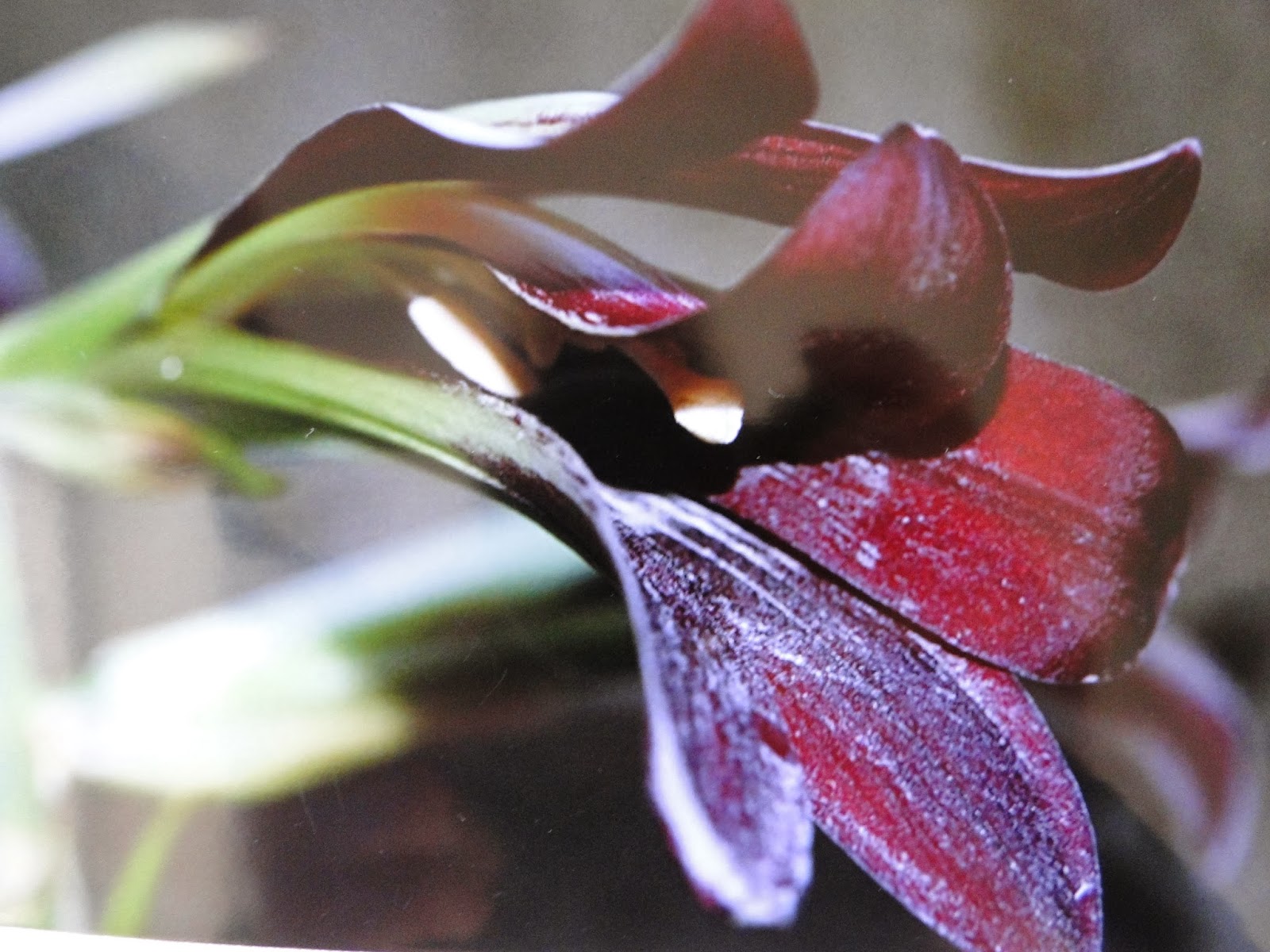
This beautiful image is of a remarkable variation on the lovely form of the genus Cardiocrinum native to Japan and called Cardiocrinum cordatum. It was sent to me by a very good Japanese friend as well as some seed! I shall sow this immediately since it will not hurt to stratify it in the cold before putting some heat on it late January. He also sent images and seed of some really exquisite variations on Anemonopsis and I shall show images of these soon. This Japanese Cardiocrinum is normally a creamy white with variable red markings in the throat so this deep maroon red is extra-ordinary. This genus Cardiocrinum was first described from Japan and the Chinese and Himalayan species were discovered later. It has similarities to the Chinese species C. cathayanum but they are currently separated. Cardiocrium giganteum occurs throughout much of the Himalayas with the sub species C.g. yunnanense from parts of China and Burma.
Wednesday, 20 November 2013

Wednesday, 13 November 2013

Seed pans of Meconopsis punicea. This seed was all harvested as soon as ripe back in late June and this continued with more batches until all was harvested. The seed trays were covered in layers of fine net and then deeply covered in moist compost. This was kept just moist until about 2 weeks ago when the trays were carefully removed from the top covering and then dressed with a little fresh grit. They can be carefully kept moist by adding a little water to the tray as necessary.This will now sit inside an unheated greenhouse until mid January when bottom heat will be applied. Normally this technique produces a high germination rate while using dried seed sowed at the same time can be very poor.
Wednesday, 6 November 2013

I recently found this picture of Alf Evans. He was the man who fired my enthusiam for Meconopsis and peat garden plants. In 1974 he wrote the 'Peat Garden and its Plants'. He ultimately was in charge of the peat beds at the Royal Botanic Gardens in Edinburgh. Years later he visited my wife's and my garden in Kingsbarns when leading a tour of Japanese people round Scottish gardens. By a strange co-incidence we both started out careers in the same place - Queens College Dundee - then a part of St. Andrews University. He studied horticulture there before the second world war and after wartime service in the Royal Airforce joined the staff at the Royal Botanic Garden Edinburgh and eventually ran the alpine , rockery and peat gardens with his real love the last. This visit inspired me to buy 40 tons of peat tailings (easily available from west Fife in those days) and start a peat garden of my own. I now maintain this garden with deep annual dressings of homemade leaf mould
Subscribe to:
Posts (Atom)