Friday, 10 July 2015

I have large clumps of various species of Cypripedium in among the Meconopsis. These were always bought as small plants and over the years can form magnificent clumps but it is a slow process. Many of the Dactylorhiza orchids do grow from seed in the garden in association with micorhiza and usually flowers appear after three or four years underground as a single large flower spike. This image is of the native slipper orchid Cypripedium calceolus which was dug up from the wild until only a handful of plants survived. Things have changed now. Orchid seeds  do not carry food reserves but in the case of the lovely species of Cypripediums people have learnt how to grow them in tissue culture or from seeds in culture. They are therefore now widely available though no doubt expensive. 

Sunday, 5 July 2015

I FEAR I COULD NOT RESIST THIS. ROAD WIDENING OPPOSITE THE HOUSE. BARE SOIL JUST LEFT UNTOUCHED SINCE THE SPRING. A LOVELY SIGHT OF THE WILD RED POPPY BUT WHERE DO THE SEEDS COME FROM ?!.THIS IS LIKE WHAT USED TO BE KNOWN AS MECONOPSIS CAMBICA (the welsh poppy) THEY MUST SURVIVE FOR MANY YEARS AS DORMANT SEEDS AND THEN GERMINATE WHEN THE SOIL IS DISTURBED. PS Sorry I forgot the picture when I made this post.

Wednesday, 1 July 2015

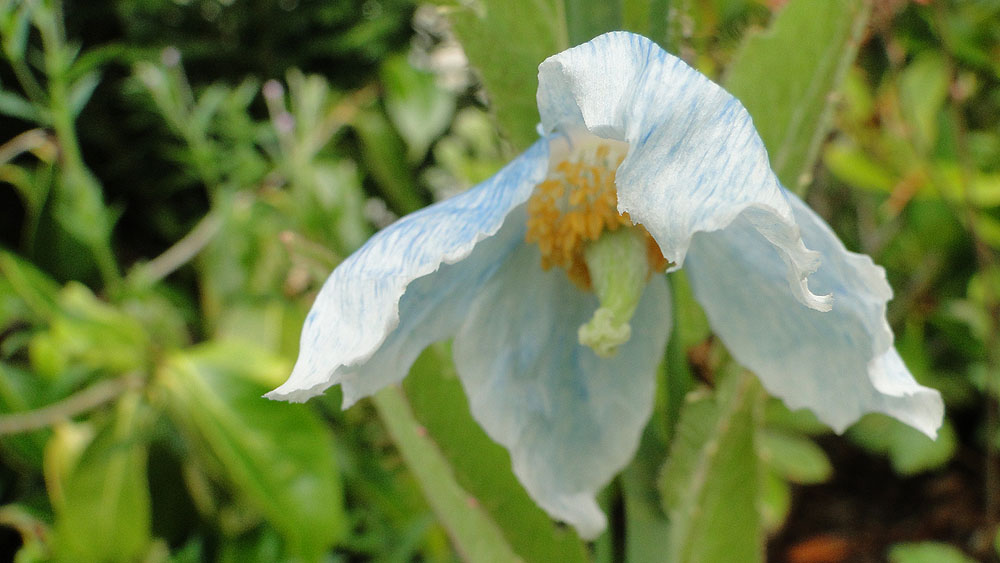
One of the advantages of writing about Meconopsis in this way is that one makes contact with people. This is a quite exquisite form of Meconopsis betonicifolia (or baileyi if you accept the current split). I planted these seedlings in my daughter in Cumbria's garden where meconopsis thrive. There are 4 plants and all are of this beautiful pastel pale blue. They are throwing side shoots so they should be perennial. These seeds were sent to me by Svetlana from Russia and they are a wonderful addition to my collections. 

Sunday, 21 June 2015

In north Caithness I have large planting of various big blue poppies for seed. This is a varition on the tetraploid Lingholm. Blues in Meconopsis can vary from year to year and I suspect temperature is involved. In the north we have had a long cold spring and so far only two pleasantly warm days of summer!


Sunday, 14 June 2015

Nothing what so ever to do with Meconopsis! Many years ago one of my daughters was working in New Zealand and as always was asked to bring me back interesting seed. It has taken all these years to grow into a tree and flower. It is the Kowhai tree. This is a native legume Sophora tetaptera - the large leaved kowhai. This genus has the reputation in the United Kingdom of not being fully hardy especially when young. It has thrived in our garden near the sea on the east coast of Scotland and the flowers up to 6 cms. long are most spectacular.

Sunday, 7 June 2015

Total heartbreak. This was a double Meconopsis punicea in the garden. Not sure compared to the true species that it is anything like so attractive - I find many double forms of wild flowers in the garden a bit over flamboyant. Plagued by mice earlier now it was the turn of wood pigeons. The garden is already lush and in good growth with at least 10 species of Meconopsis as rosettes or in flower. On Thursday I did my daily rounds and found every flower, every seed pod and every bud on every single Meconopsis punicea had been eaten by wood pigeons (Columba palumbus). Nothing else was touched and there were 4 separate planting of punicea. Now there will be no seed. I did give plants away to 3 botanic gardens last year so hopefully they have not all been molested by this plague species - totally out of control in the U.K. There was poor germination this year of limited seed but I do have about 40 seedlings but it is having nothing to sow for next years plants that it so sad since it is normally biennial. The only positive thing to come out of this is JUST MAYBE they will either develop new flower buds for later in the summer or perhaps just possibly wait and flower next year.

Tuesday, 2 June 2015

There is a well known cross between Meconopsis punicea and the mauve M. quintuplinervia. This is my own version of it. Interesting but not sure it really has much merit!